
Decks
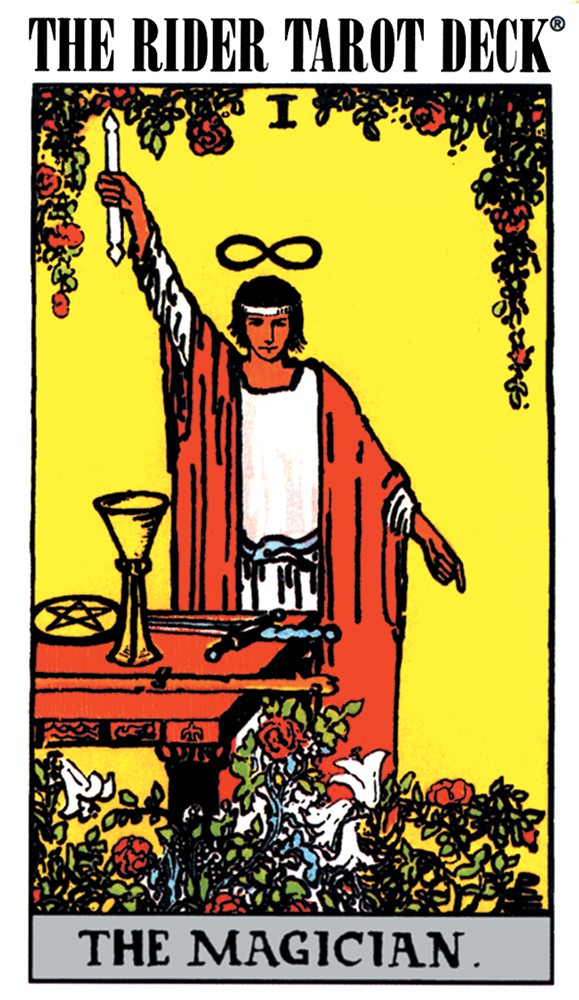
Rider-Waite-Smith 0
The Rider-Waite-Smith (RWS) Tarot, created in 1909 by occultist Arthur Edward Waite and illustrated by Pamela Colman Smith, was published in London by William Rider & Son. Grounded in the esoteric tradition of the Hermetic Order of the Golden Dawn, the deck revolutionized modern tarot by featuring fully illustrated scenic pips for all 56 Minor Arcana cards and transposing Strength to VIII and Justice to XI to match astrological correspondences.
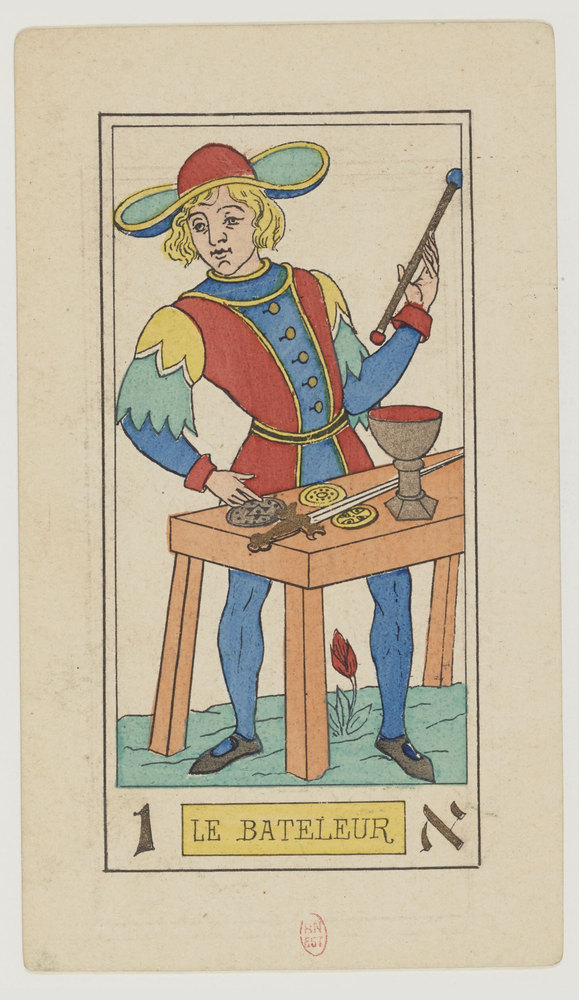
Oswald Wirth (1889) 0
Twenty-two trumps and nothing else — this deck has no minor arcana at all. Oswald Wirth drew it in 1889 for Stanislas de Guaita, and it is the first tarot made deliberately as an occult instrument rather than as a game. Beside each card's number stands a Hebrew letter, the attribution the whole later esoteric tradition rests on. Wirth renames two: his Tower is the Fire of Heaven and his Star is the Stars. Scans from the Bibliothèque nationale de France via Wikimedia Commons, public domain.
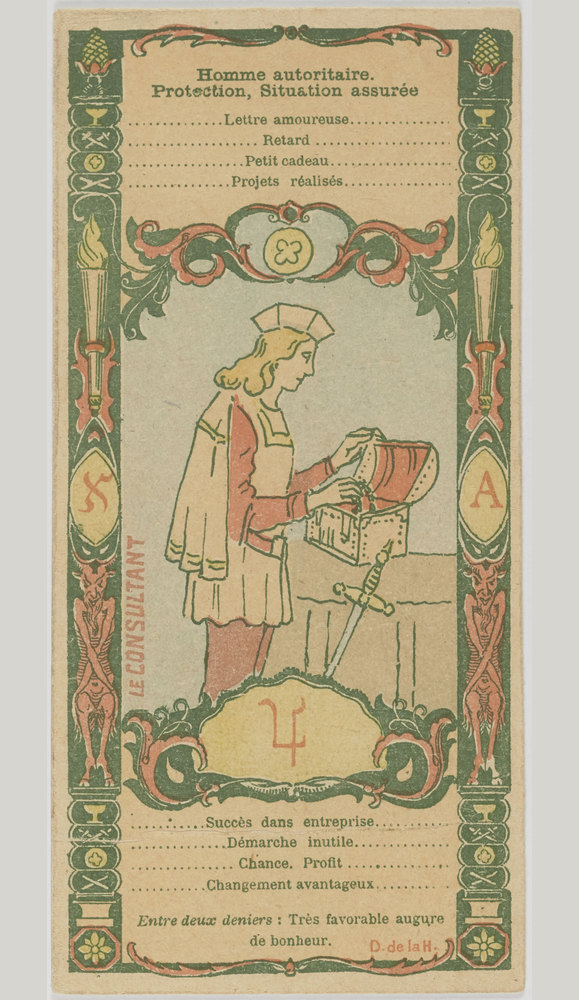
Tarot hiéroglyphique égyptien (Dulora de la Haye, Paris, 1897) 0
Twenty-two trumps and nothing else, printed in Paris in 1897 by Madame Dulora de la Haye with a twelve-page booklet and a card étui. The cards are large — 161 mm — and each carries its readings printed above and below the picture, so the deck is its own manual. Her names are her own: the Milky Way for the Star, the Will for Judgement, a Shield and a Vase where the Hermit and the Chariot usually stand, and four cards at the head of the sequence that stand for the querent. The order is fixed by the letter of her hieroglyphic alphabet in the cartouche at each card's right edge. Scans from the Bibliothèque nationale de France via Wikimedia Commons, public domain.
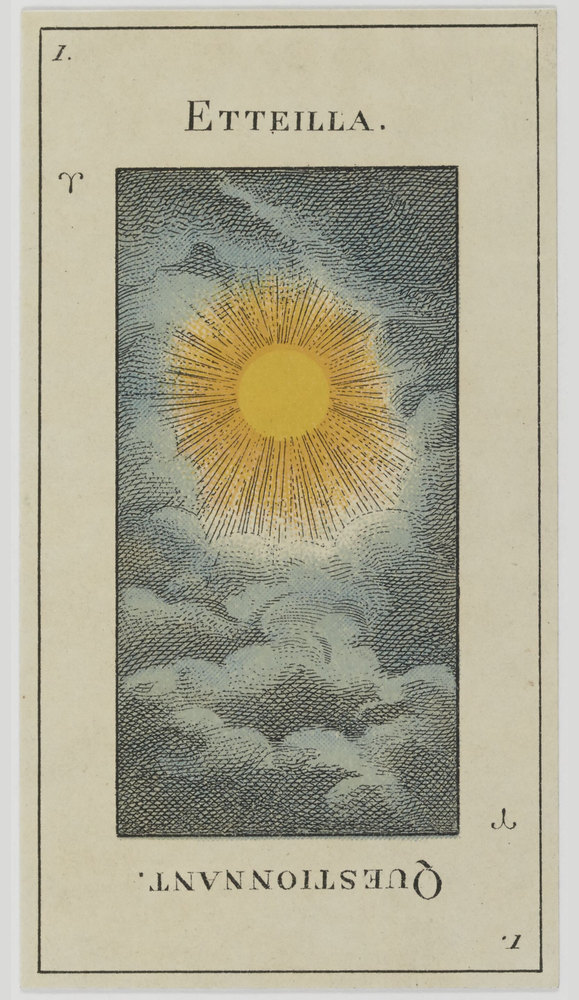
Grand Etteilla (Grimaud, Paris, c. 1890) 0
The first tarot designed purely for divination, and still the only one where the card is its own interpretation: the upright reading is printed across its head and the reversed reading, upside down, across its foot. All seventy-eight cards are numbered in one run from 1 to 78, and the trumps are not the Marseille subjects at all but Chaos, Light, the Plants, the Sky and the other stages of creation. The deck descends from "Etteilla" — Jean-Baptiste Alliette, a seed merchant who reversed his name in the 1780s and invented this order. Printed by B.-P. Grimaud in Paris between 1875 and 1899. Scans from the Bibliothèque nationale de France via Wikimedia Commons, public domain.