
Decks
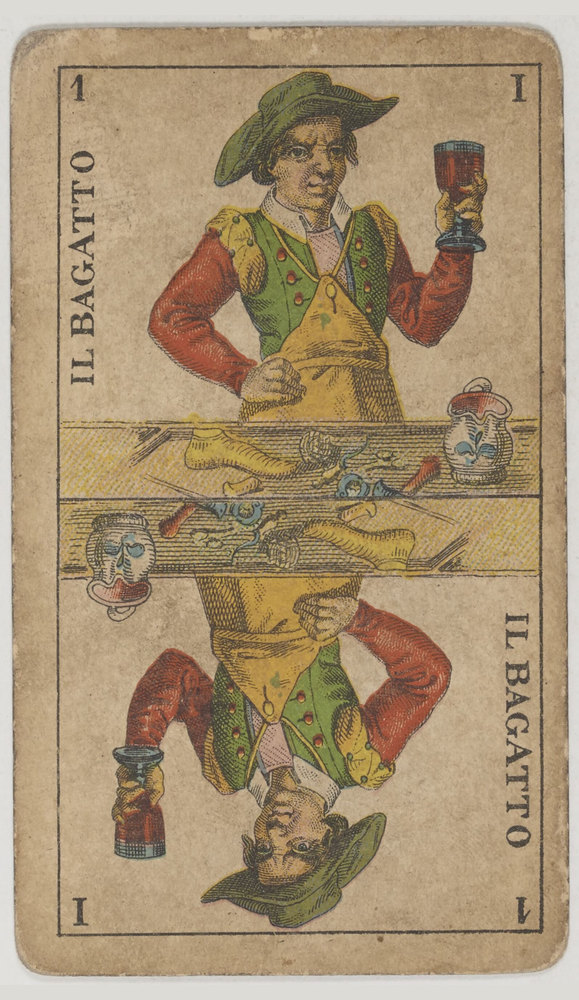
Tarocco Piemontese (Della Rocca, Genoa, 1887) 0
A Piedmontese tarot printed by Fratelli Armanino in Genoa in 1887, following the pattern Carlo Della Rocca engraved for Gumppenberg in Milan in 1835. Courts and trumps are double-headed, as nineteenth-century Italian playing cards were, and the deck is drawn and lithographed rather than cut in wood — which sets it apart from every other historical deck here. It keeps the Marseille order, where Justice is VIII and Strength is XI, the reverse of Rider-Waite-Smith. Scans from the Bibliothèque nationale de France via Wikimedia Commons, public domain.
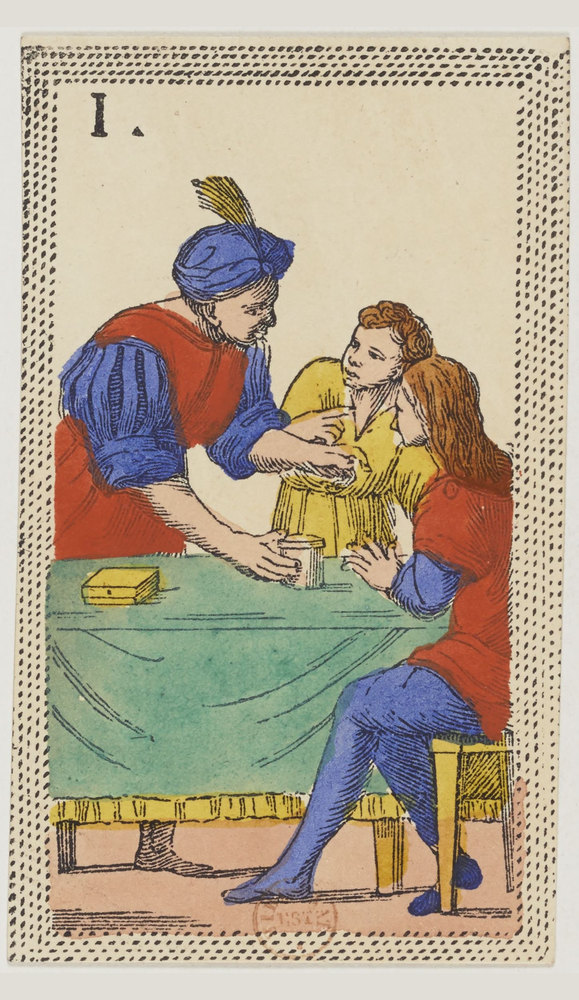
Minchiate (Baragioli, Florence, c. 1870) 0
A Florentine Minchiate — 97 cards, the largest historical tarot. Forty trumps and the Fool in place of twenty-two, holding the four cardinal and three theological virtues, the four elements and the twelve signs of the zodiac. The top five trumps — Star, Moon, Sun, World and the Trumpets — carry no numeral and rank above everything numbered; the Trumpets is captioned FAMA VOLAT, rumour flies. Printed by A. Baragioli in Florence between 1860 and 1890. Scans from the Bibliothèque nationale de France via Wikimedia Commons, public domain.
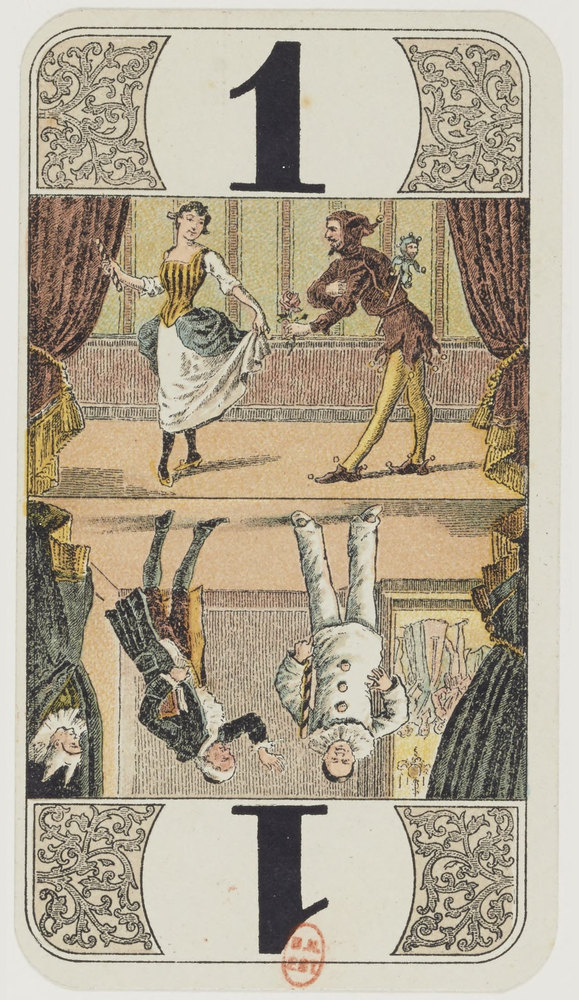
Tarot Nouveau (Grimaud, Paris, c. 1898) 0
A playing deck rather than a divinatory one. Twenty-one numbered trumps and the Excuse, with four French suits — hearts, diamonds, clubs and spades — of fourteen cards each. The trumps carry no titles and no occult subjects at all: they are double-headed genre scenes of nineteenth-century life, printed for the game of French tarot, which is still played with this pattern today. Printed by B.-P. Grimaud in Paris in 1898 or 1899. Scans from the Bibliothèque nationale de France via Wikimedia Commons, public domain.
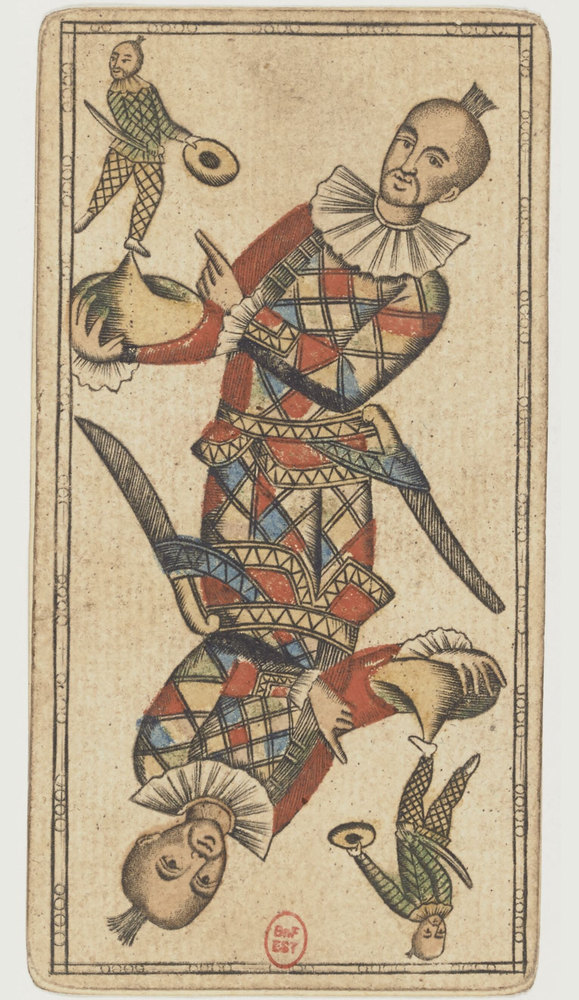
Wiener Tarock (Hoffman, Vienna, c. 1800) 0
A Viennese tarock of fifty-four cards, printed by Norbert Hoffman in Vienna around 1800 — his address is on the Jacks of Clubs and Hearts. It is a game pack, not a divinatory one: the four French suits are stripped to eight cards each, the red suits keeping the low pips and the black the high, and the twenty-one numbered trumps carry chinoiserie scenes above sea-monsters rather than any tarot subject at all. The Sküs, unnumbered, is not a fool standing outside the game but the highest card in it. The BnF calls the pattern "Lemberg". Scans from the Bibliothèque nationale de France via Wikimedia Commons, public domain.
Tarocchino Bolognese (Zanardi, Bologna, c. 1850) 0
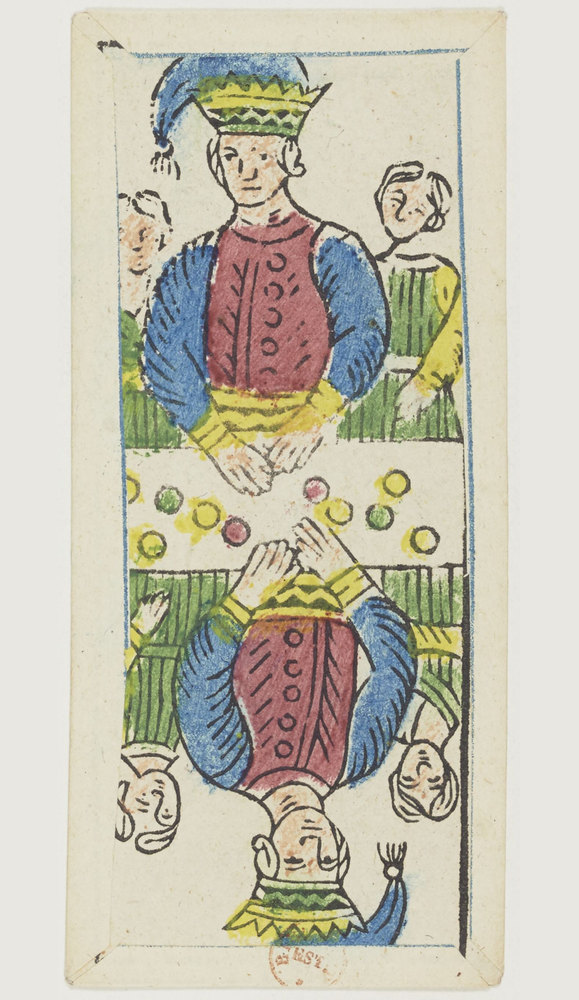
Sixty-two cards: the twos, threes, fours and fives were thrown out of every suit back in the fifteenth century to make the game quicker, and the pack has stayed that way ever since. Four Moors of equal rank stand where an ordinary tarot has the Popess, Empress, Emperor and Pope — they replaced them in 1725. Only trumps 5 to 16 carry a number; the Begato, the Matto and the four highest carry none at all. The cards are double-headed. Made by Carlo di Gio Zanardi in Bologna between 1840 and 1860. Scans from the Bibliothèque nationale de France via Wikimedia Commons, public domain.