
Decks
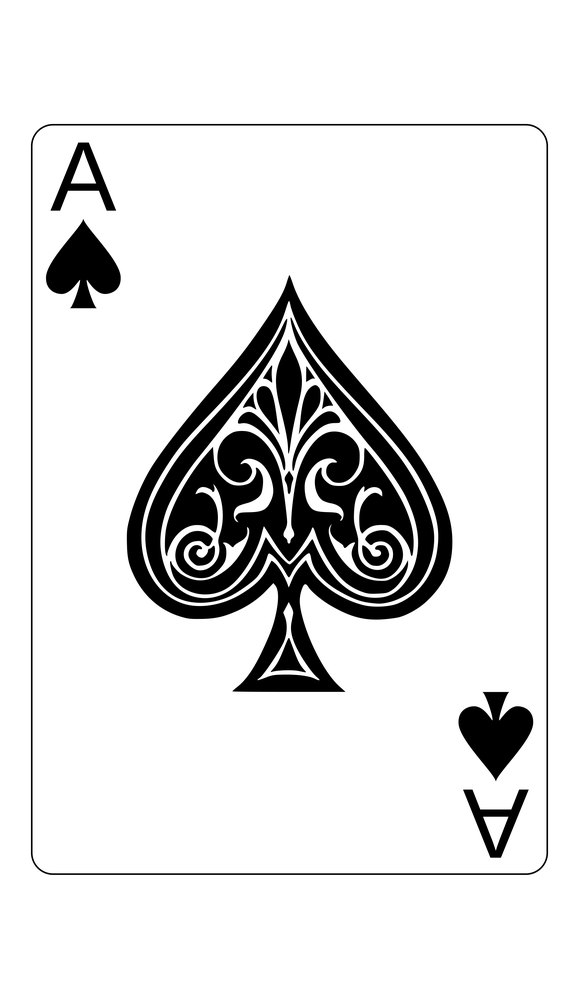
Vector Playing Cards (Byron Knoll) 0
An ordinary deck: the fifty-two cards of the English pattern that everyone already knows, plus two jokers. Drawn as vector art by Byron Knoll and released to the public domain. It is the only deck here that is not a historical artefact — it is in the collection to be the plain deck the others can be read against. The set carries no card back, so the one shown is a modern reconstruction. Images from Wikimedia Commons, public domain.
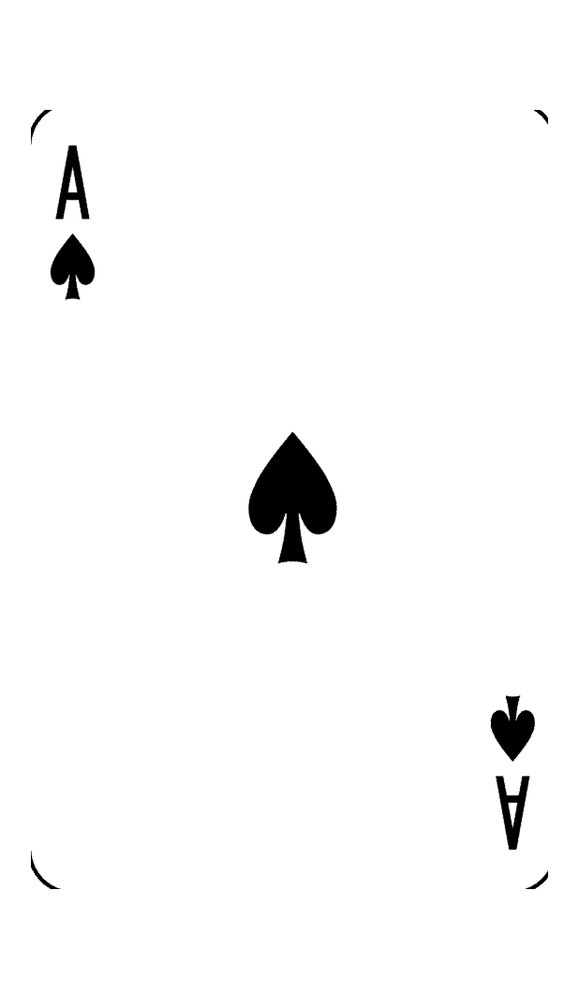
English Pattern (Fomin) 0
The collection's second ordinary deck: the same fifty-two English-pattern cards, two jokers and a back. The cards were drawn by Dmitry Fomin and dedicated to the public domain under CC0; the sheet they are cut from here was assembled by Guy vandegrift, who added the jokers, the backs and a blank card, and released it under the LGPL. This whole deck therefore travels under the LGPL rather than CC0 — worth knowing, since it is copyleft inherited onto otherwise public-domain art. The jokers are captioned in Russian: ДЖОКЕР. Images from Wikimedia Commons.
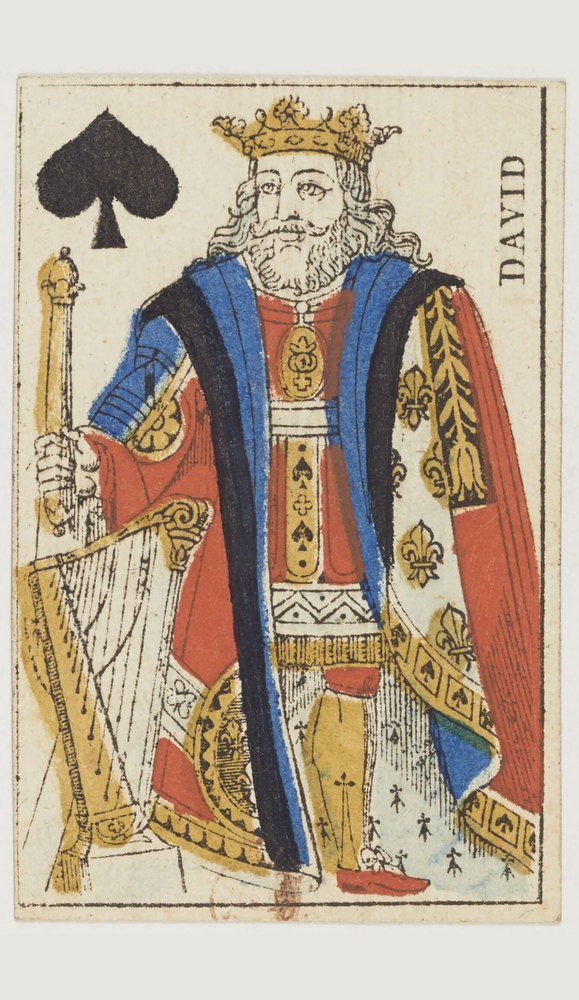
Piquet au portrait officiel (Paris, 1816) 0
A thirty-two card piquet pack in the French official portrait, engraved on metal and stencil-coloured in Paris in 1816. The twos through sixes are gone from every suit, which is what piquet — and most nineteenth-century French cartomancy — was played with. The courts are single-headed and each carries its traditional name printed beside it: David, Pallas and Hogier for spades, and so on through all four suits. The backs are plain, as French cards of this date were. Scans from the Bibliothèque nationale de France via Wikimedia Commons, public domain.
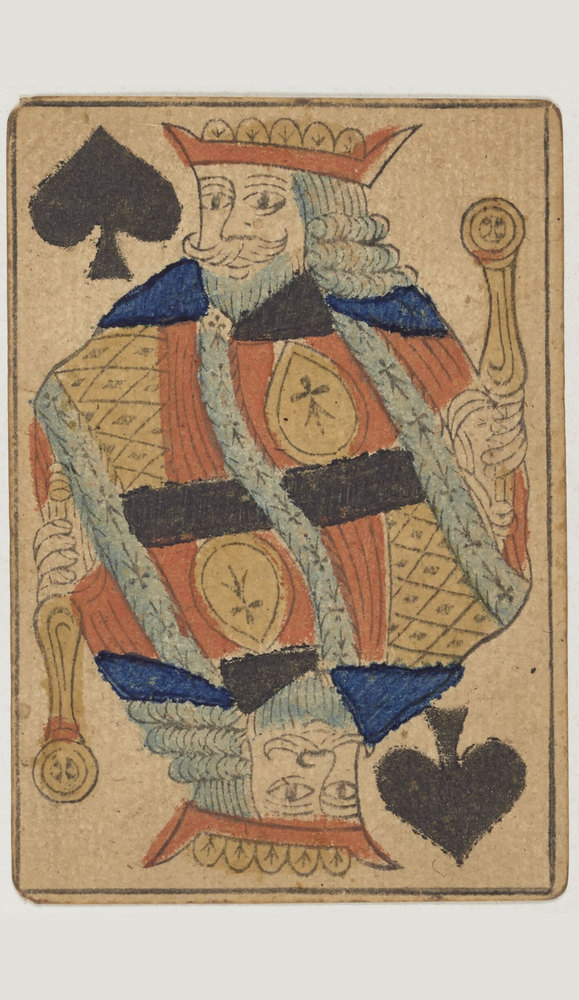
Piquet au portrait de Paris (Lebeuf, c. 1805) 0
A thirty-two card piquet pack printed by Lebeuf in Paris between 1800 and 1813 — his name is on the Queen of Spades and the King of Hearts. Unlike the official portrait beside it, this one is double-headed, so the courts are mirrored and carry no names, and it has a printed blue star-pattern back. The same thirty-two cards: no twos through sixes in any suit. Scans from the Bibliothèque nationale de France via Wikimedia Commons, public domain.